How Double-Entry Bookkeeping Works in a General Ledger
Content

Double entry refers to a system of bookkeeping that, while quite simple to understand, is one of the most important foundational concepts in accounting. Basically, double-entry bookkeeping means that for every entry into an account, there needs to be a corresponding and opposite entry into a different account. It will result in a debit entry in one or more accounts and a corresponding credit entry in one or more accounts.
- This allows you to track money coming into your business and going out of it.
- That activity includes things like the $5.50 you spent at the coffee shop during your breakfast meeting as well as the customer payment you deposited.
- A debit is always on the left side of the ledger, while a credit is always on the right side of the ledger.
- When a company borrows funds from a creditor, the cash balance increases, but the balance of the company’s debt increases by the same amount.
- Your assets increase (are debited) because now your business has cash.
Double-entry bookkeeping is based on balancing the accounting equation. The accounting equation serves as an error detection tool; if at any point the sum of debits for all accounts does not equal the corresponding sum of credits for all accounts, an error has occurred. However, satisfying the equation does not guarantee a lack of errors; the ledger may still «balance» even if the wrong ledger accounts have been debited or credited. You might have noticed that every transaction we recorded immediately impacted two accounts if you had taken a quick look at the one-page financial statements from our last post on the balance sheet and income statement.
Start exploring the best personal finance content!
This practice ensures that the accounting equation always remains balanced; that is, the left side value of the equation will always match the right side value. Bookkeeping and accounting track changes in each account as a company continues operations. If you want your business to be taken seriously—by investors, banks, potential buyers—you should be using double-entry. Double-entry provides a more complete, three-dimensional view of your finances than the single-entry method ever could.
How to do a double-entry ledger?
Step 1: Create a chart of accounts for posting your financial transactions. Step 2: Enter all transactions using debits and credits. Step 3: Ensure each entry has two components, a debit entry and a credit entry. Step 4: Check that financial statements are in balance and reflect the accounting equation.
Glancing back at these entries, you’d also have no idea which account the $3,000 for rent was withdrawn from. This is why single-entry accounting isn’t sufficient for most businesses. Single-entry bookkeeping is a record-keeping system where each transaction is recorded only once, in a single account. This system is similar to tracking your expenses using pen and paper or Excel.
Accounting equation approach
In double-entry bookkeeping, debits and credits are terms used to describe the 2 sides of every transaction. Debits are increases to an account, and credits are decreases to an account. For example, a copywriter buys a new laptop computer for her business for $1,000. She credits her technology expense account for $1,000 and debits her cash https://www.bookstime.com/ account for $1,000. This is because her technology expense assets are now worth $1000 more and she has $1000 less in cash. Track input errors, at the frequency of your choice, analyze all accounting records (sales, purchases, bank transactions, expense reports) and use the wizard to fix manually when particular changes are required.
- To account for the credit purchase, entries must be made in their respective accounting ledgers.
- The system was first documented in a book by Luca Pacioli in Venice in 1494.
- Some basic knowledge of accounting is helpful, because the double-entry system of debits, credits, and multiple accounts might seem daunting to a newcomer.
- You’re tracking your money so you can later interpret that information via financial statements.
Sole proprietors, freelancers and service-based businesses with very little assets, inventory or liabilities. When you receive the money, your cash increases by $9,500, and your loan liability increases by $9,500. For businesses in the United States, the Financial Accounting Standards Board (FASB), is a non-governmental body. They decide on the generally accepted accounting principles (GAAP), which are the official rules and methods for double-entry bookkeeping. Accountants today do not typically use a physical general ledger book; however, modern accounting software uses the same underlying concept of posting two entries to the general ledger for every transaction. If a company sells a product, its revenue increases and its cash increases by an equal amount.
Example 1: Business Purchases Using Credit
If you’re not sure whether your accounting system is double-entry, a good rule of thumb is to look for a balance sheet. If you can produce a balance sheet from your accounting software without having to input anything other than https://www.bookstime.com/articles/single-vs-double-entry-bookkeeping the date for the report, you are using a double-entry accounting system. Now, you can look back and see that the bank loan created $20,000 in liabilities. Money flowing through your business has a clear source and destination.
- A debit is that portion of an accounting entry that either increases an asset or expense account, or decreases a liability or equity account.
- You might have noticed that every transaction we recorded immediately impacted two accounts if you had taken a quick look at the one-page financial statements from our last post on the balance sheet and income statement.
- Use a predefined chart of accounts or setup your own chart of accounts.
- For instance, we used (reduced) funds from our bank account (an asset account) to pay the Rent, and we logged the payment to Rent (an expense account).
- Money flowing through your business has a clear source and destination.
Double-entry bookkeeping produces reports that allow investors, banks, and potential buyers to get an accurate and full picture of the financial health of your business. Let’s look at some examples of how double-entry bookkeeping is used for some common accounting transactions. So, if assets increase, liabilities must also increase so that both sides of the equation balance. If the bakery’s purchase was made with cash, a credit would be made to cash and a debit to asset, still resulting in a balance.
Log in to your Money account.
When you debit a stockholders’ equity account, you increase its balance; when you credit a stockholders’ equity account, you decrease its balance. Assets are recorded on the left side of the ledger, while liabilities and equity are recorded on the right side. Most popular brands of accounting software use involve double-entry accounting. These software applications make double-entry accounting easy to use. You can simply enter a transaction in the form of a check, invoice or bill, and the impact of the transaction is automatically entered on a second account. The payments that are made into and from these accounts as a result of a transaction can be recorded as either a debit or a credit.
What is an example of a double entry ledger?
An example of double-entry accounting would be if a business took out a $10,000 loan and the loan was recorded in both the debit account and the credit account. The cash (asset) account would be debited by $10,000 and the debt (liability) account is credited by $10,000.
Each person should consult his or her own attorney, business advisor, or tax advisor with respect to matters referenced in this post. Bench assumes no liability for actions taken in reliance upon the information contained herein. In the meantime, start building your store with a free 3-day trial of Shopify.
As a company’s business grows, the likelihood of clerical errors increases. Although double-entry accounting does not prevent errors entirely, it limits the effect any errors have on the overall accounts. Using this system reduces errors and makes it easier to produce accurate financial statements. Double-entry bookkeeping’s financial statements tell small businesses how profitable they are and how financially strong different parts of their business are. When all the accounts in a company’s books have been balanced, the result is a zero balance in each account.
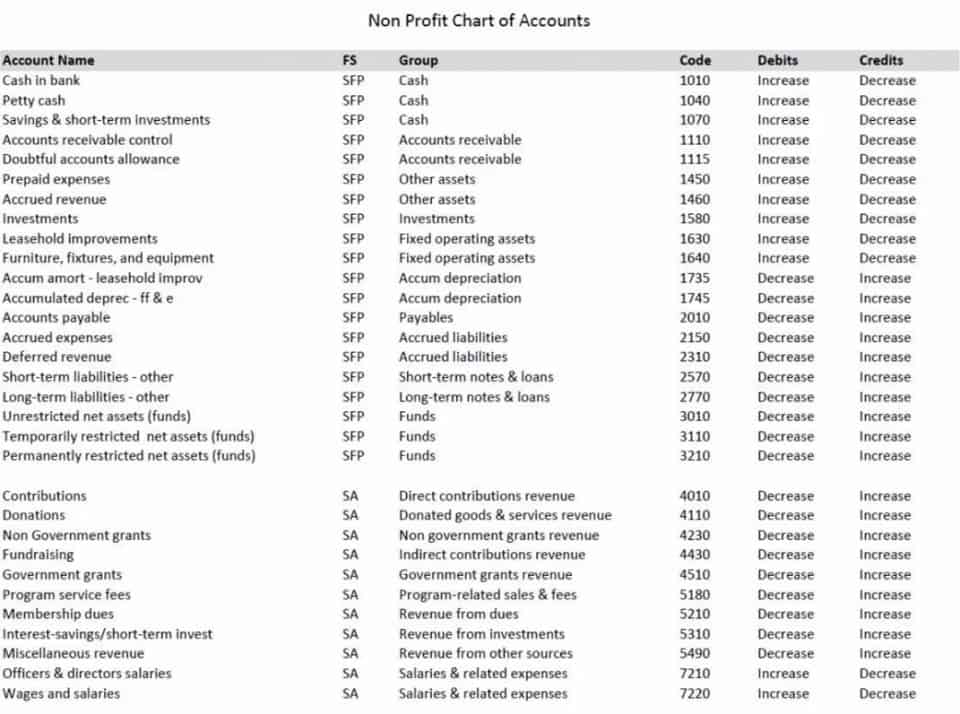
Regardless of which accounts and how many are involved by a given transaction, the fundamental accounting equation of assets equal liabilities plus equity will hold. It’s easier to explain debits and credits as accounting concepts, as opposed to physical things. Every transaction within your business produces a debit in one account and a credit in the other.
In order to achieve the balance mentioned previously, accountants use the concept of debits and credits to record transactions for each account on the company’s balance sheet. Double-entry bookkeeping means that a debit entry in one account must be equal to a credit entry in another account to keep the equation balanced. When entries are made into a company’s general ledger using double-entry accounting, debits are recorded on the left and credits on the right. If the numbers have been entered properly, the total credits of the business will equal the total debits. Double-entry bookkeeping is an accounting method where each transaction is recorded in 2 or more accounts using debits and credits. A debit is made in at least one account and a credit is made in at least one other account.
A debit is how you used your funds, what you received or purchased; a credit is the source of your funds, where the money came from, or what you gave. When inputting journal entries, debits are always recorded on the left, and credits on the right. When you’re working with a company’s general ledger, it’s important to keep the equation in balance. If you’re using the accrual method of accounting for inventory, when you enter a journal entry, you have to keep these two sides in balance by matching debits to credits. If the two sides of the equation are out of balance, then you have an error or omission in your records. The cash balance declines as a result of paying the commission, which also eliminates the liability.